Saturday, 15 January 2011

The Elephant Man


In Whitechapel Road, London there is a small shop which sells saris. 127 years ago the same shop was used for a very different purpose; to exhibit a man whose body was so terribly disfigured with evil-smelling skin growths he was nicknamed 'The Elephant Man'. His real name was Joseph Carey Merrick and this book is about his life and the people who knew him.

I won't go into masses of detail surrounding Joseph as I am sure most people have heard of him, he is famous even today because of his (mercifully) rare medical condition and the tremendous suffering he went through in a largely uncaring world. His mother died when Joseph was 10 years old and his father re-married shortly after. Joseph's step-mother was cruel and impatient towards him forcing him to leave home and enter the workhouse. Eventually he began working in freak shows, exhibiting himself to the public for money. It was in this capacity that he met Sir Frederick Treves; a young surgeon from the London Hospital. Merrick left London shortly after this and went through all manner of very unpleasant experiences before he finally returned and moved into the London Hospital. Here he was cared for by the doctors and nurses before his death at the young age of 27.

The book is very informative and well put together, it is clear a lot of hard work went into it and I'm glad I had the opportunity to read it.. It was very interesting to read how many myths surround Joseph, one of the biggest being that his first name was John. An interesting fact is that Joseph attributed his frightful condition to his mother being scared by an elephant when she was pregnant with him. I am left with the strong impression that Joseph was a kind and gentle man, popular with those who took the trouble to know him and certainly not a man deserving of what happened to him. I am thankful he was cared for before he died.

The book doesn't claim to know everything and sadly a lot of the details of Joseph's life have been lost over the years. Some very good photographs are included as well as a two page 'autobiography' believed to have been written by Joseph himself. The book also gives detail on the Victorian attitudes to freak shows and gives an insight into the operations of the workhouses of that time period.

Overall rating 4/5

Chris

Tuesday, 11 January 2011

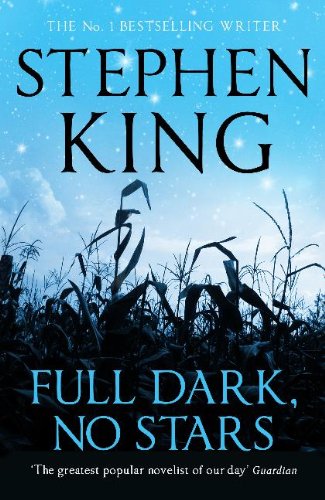
Full Dark No Stars by Stephen King


Stephen King oh how I know what to expect from you. I know I will get an easy read full of normal characters thrown into terrifying situations. I know there will be padding (lots of it) and I know that you will never blow my mind but I will be delivered a fat slice of good old entertainment. Ah Stephen you never disappoint.

Full Dark No Stars is a collection of four novellas which can be read as separate stories since they do not have a common theme or connect in any way.

Two of the stories have supernatural elements but the more terrifying stories do not. Rapists and murderers are scarier than ghosts and animated corpses (even if the corpse in question is your vengeful wife). The action that takes place in the stories is sometimes horrific, certainly dark and are just about thought provoking enough to linger on the mind. A couple of the stories cause the reader to think 'What would I do'? But even in a short Novella there is a little padding to be found. Whatever I found within this book was all that I expected.

Fans of Stephen King will not be disappointed in this collection and if you are not a fan then Full Dark No Stars will probably not be the novel that will change your mind.

Posted by Jess

Monday, 10 January 2011

The Blasphemer by Nigel Farndale


The Blasphemer is one of those novels which starts off great but unfortunately started to fall apart for me and was completely unravelled by the end.

The main character Daniel Kennedy is a scientist and quite the aggressive atheist (think Richard Dawkins aggressive) David takes his partner and the mother of his child on a trip to the Galapagos Islands and while there, their small sea plane crashes into the sea. It is while swimming to shore in order to save his fellow passengers that David sees a vision. Was this vision a mere symptom of his fatigue and stress or a guardian angel?

While that plot line is interesting enough, running parallel to this is the story of Daniel’s great-grand father and his experiences in World War I as he prepares to go over the top on the first day of the fighting at Passchendaele.

The novel starts promisingly enough and there are some really good ideas. The World War I scenes are quite good (but not a patch on Birdsong) and I liked the whole concept of the scientist atheist coming across something he is unable to explain. There are so many good ideas and different plot threads but unfortunately they did not always gel together well enough with some plot elements not working sufficiently well.

There is a bizarre Muslim terrorist sub-plot which has no reason at all to be in the novel and is never concluded. The only Muslim character in the book is a teacher who is being trailed by the police for no reason at all and, by the polices own admission, the guy has done nothing wrong. I just found this really unnecessary and out of place.

Then there is Daniel’s work colleague Weatherby; a devout Christian with an evil streak taken to almost comical proportions (think sleazy professor who likes to sleep with his students, which has been done a million times before) and seems intent on ruining Daniels life for no reason whatsoever.

Religion and belief is a big theme in the novel and Daniel has quite a few religious debates throughout the novel with both Wetherby (who is a professor) and his best friend (who is a doctor.) But despite these three grown men having highly professional intelligent careers, the ‘debates’ never go beyond ‘well you’ve never seen Greenland so how do you KNOW that exists’. Honestly! That’s the kind of religious debate a child would have – with another child.

Finally I quite like happy endings I really do. But not when the author has to make the plot more and more convoluted within the last 40 pages in order to get there.

Well yes I have a lot of bad to say about this one (believe me;I could have gone on) but I did read to the end because the plot was interesting and I did want to see how it all ended. It wasn't as bad as I have made out in this review but two days after I have finished reading it I am unable to remember any of the novel's stronger points.

Overall it did engage me but ultimately it could have been better executed.

Verdict 3/5

Posted by Jess

Saturday, 8 January 2011

Olive Kitteridge by Elizabeth Strout


Olive Kitteridge is a 2008 novel which won its author Elizabeth Strout the pulitzer prize.

The novel is essentially a series of short stories, all of which could stand alone in their own right. The added twist is that Olive Kitteridge appears in all the stories ether as the main character or is only mentioned in passing. The effect of all these components when put together makes for not only a compelling character in Olive but also a profile of some of the residents of the small town she lives in.

Olive herself is human. She most certainly has her bad points including a very difficult relationship with her son, but she is also able to touch other people lives in a sometimes subtle or obtruce way. Olive's emotions while not always understandable are realisticly portrayed and powerful.The overall theme for me though is 'getting old sucks'.

This is not a novel packed full of plot and I found it far more depressing than uplifting, but each chapter made me pause and think about it long after I had finished it.

Verdict 4/5

Posted by Jess

Tuesday, 4 January 2011

Even the Dogs by Jon McGregor


Jon McGregor is an author which has impressed many people with his first two novels, If Nobody Speaks of Remarkable Things and So Many Ways to Begin.

Even the Dogs is McGregor’s third novel and begins with the body of a man called Robert being discovered in his squalid flat where he has been laid dead for days. Robert was an alcoholic who during his life had frequent visits throughout the day and night from his friends who are all drug addicts.

The novel follows an unnamed observer which darts about from Roberts’s life to those of his friends giving glimpses into their daily life’s and pasts.

Given the topic and the lives of the characters you'd expect this book to be grim, which it is. This is not an uplifting story with happy endings but rather a look at the lives of people who for whatever reason have fallen through the safety net our society is meant to provide.

The addicts featured in the novel live in a bleak world and I have no doubt that they would quite happily sell their own grandmother in exchange for drugs. Bizarrely as well these characters slightly merge into each-other as the drugs strip away the personality's that they might have been once in possession of. The characters do not resort to crime in the novel (well very little) which surprised me at first but when you read on you realise why.

The writing style is poetic but also experimental. The narrative jumps quickly from character to character and sentences stop halfway through. This sounds annoying but it really isn't, it suits the storyline and the overall effect is moving.

The subject matter along with the swearing and general misery might put people off reading this but that would be a shame as this is a realistic insight into the lives of some once ordinary people. At the very least its worth checking out some other blogger reviews.

Verdict 4/5

Posted by Jess

Saturday, 1 January 2011

Fathers and Sons


Fathers and Sons is considered a classic of Russian literature. Although I had never heard of him before Ivan Turgenev is up there with Tolstoy and Dostoevsky as one of the most talented and influential writers of his generation.

Fathers and sons is basically a story about two generations in conflict. Russia has a history strewn with political, social and often bloody upheaval and this book focusses on a particular period in Russian history when reforms were on the rise changing the traditional relationship between peasants and wealthy landowners. A new generation of free thinkers were emerging from universities with new ideals and radical ideas for changing social norms. This creates a great deal of tension between the old school 'Aristocrats' and new school 'Nihilists' who maintain that nothing in society has any worth or value.

Arguably the main character is Yevgeny Vasil'evich Bazarov; a young nihilist student who comes to stay with a friend's family in the countryside. Before I came across Bazarov I thought I knew what cynicism was, I've been called cynical myself quite a few times, but it seems I didn't have a clue of how far someone can take it.

Bazarov thinks everything is rubbish. When I say “everything” this is no exaggeration. Love? Nonsense. Romance? A joke. Tradition? Forget it. Marriage? Waste of time. A good example is that Bazarov's ambition in life is to become a country doctor and yet he tells anyone who will listen that he doesn't believe in medicine. He holds everyone and everything in contempt, that is until he meets Anna Sergeevna Odintsova and, rather inconveniently, falls completely in love with her.

There are quite a few other characters but for the most part they are eclipsed by Bazarov's enormous ego, easily the size of any farmhouse. However for all of his somewhat hypocritical bluster Bazarov is not a fool nor a bad person, just young, misguided and suffering with a severe case of 'angry young man' syndrome. When he offends an aristocrat he is staying with Bazarov is challenged to a duel which he wins by shooting his opponent in the leg (albeit by good fortune rather than deliberately aiming) he could have killed the aristocrat with his second shot but instead chose to provide medical assistance and help him back to his house.

The book is well put together and most certainly an interesting read not just because of the colourful, believable characters but also because of the many glimpses of Russian culture, attitudes and habits the reader sees. I can honestly say I doubt I've ever learned so much from reading a work of fiction. Sadly it is not all positive; at times the story dragged on. More than once I put the book down feeling tired after reading 30 pages to suddenly discover, to my great consternation, that I had in reality only read 10 pages. For the most part not a great deal happens except conversations between characters. There are one or two moments in the book where I found I was so excited I couldn't put it down but this was rare.

Overall it was a valuable book to read and I enjoyed it. It was an excellent introduction to Russian fiction and I hope to read more of the same.

Rating 4/5

By Chris